1d 16h 03m

Year-end rates end Sun 7 Dec

Plastics

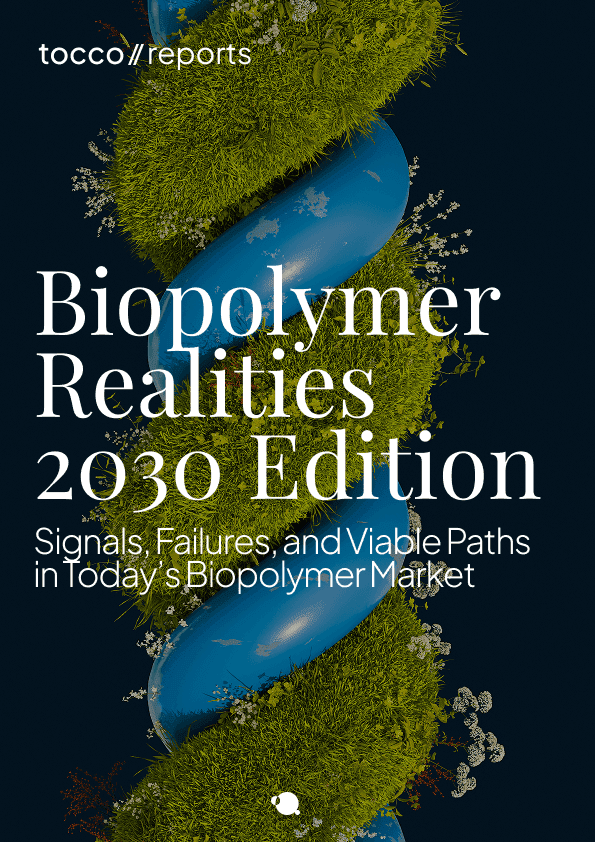
Tocco Report: Biopolymer Realities 2030 Edition

Signals, Failures, and Viable Paths in Today’s Biopolymer Market

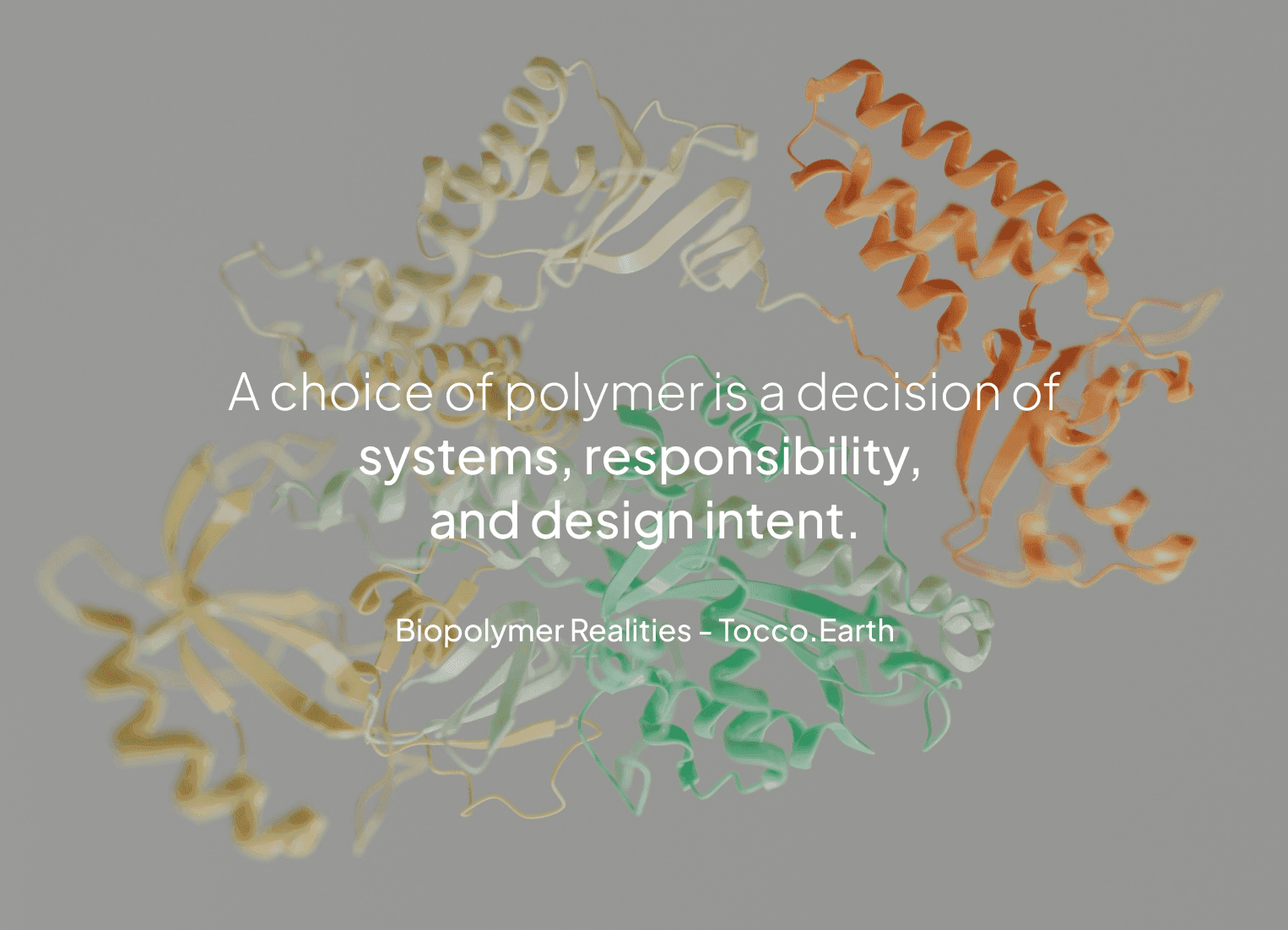
Let’s be clear: biopolymers are not the answer to plastic. But they are the most material shift happening in plastics today. Biopolymers are a wide class of polymers that are either made by living organisms or derived from biological feedstocks: from corn, cassava, algae, sugarcane and wood pulp to microbial fermentation processes. Some are biodegradable. Some are industrially compostable. Others are simply bio-based versions of conventional plastics, behaving identically but sourced from plants instead of petroleum. This isn’t a new idea, but what’s new is the pace, pressure, and scale.

This report doesn’t celebrate “green” plastics. The Tocco team aims to map the current biopolymer field with precision. We hope to outline core material families and compares them on what really matters: performance, processing, compostability, regulation, and commercial relevance.
Glues & Adhesives 2030 Edition Report Cover

Explore This Report

Start with the Free Version or unlock the Full Report with deeper insights, case studies, and extra content.

  1. PLA Overview & Performance Limits
  2. PHA Overview & Novelty - Bacterial synthesis
  3. Starch Polymers, Pros & Pitfalls
  4. Protein-based Polymers
  5. Cellulose-Based
  6. Crustacean-Derived & Fungal Innovations
  7. Algae-Derived Polymers
  8. Synthetic Biopolymers & Novel Pathways
  9. Glossary
Black rubber material

Materials in focus

Explore the innovative materials shaping the future
Biodegradable
Explore the evolving landscape of biodegradable materials with a focus on biodegradable plastics.

Biodegradable

Learn more
Recycled
Discover the benefits and challenges of recycled materials, as well as insights into how recycling transforms waste into valuable resources.

Recycled

Learn more
Bamboo
Introducing bamboo as an interesting alternative material. Learn about bamboo's incredible growth, and processing into textiles, paper, and construction materials.

Bamboo

Learn more
Mycelium
Get into the world of mycelium, and discover its applications and the potential it holds for revolutionizing packaging and product design.

Mycelium

Learn more
Silk
Discover the intricate world of silk, its rich history, production processes, and its ethical alternatives.

Silk

Learn more
Upcycled
A deep dive into upcycled materials, examining their pros and cons

Upcycled

Learn more
Cotton
Learn about cotton, the world's most used natural fibers, its environmental aspects and its significance in the global textile industry

Cotton

Learn more
Linen
Dive into the rich history and versatile applications of linen, and understand why linen remains a timeless and eco-friendly choice in the world of natural fabrics.

Linen

Learn more
Latex
Explore the world of latex, where we compare the properties, uses, and environmental impacts of natural and synthetic latex.

Latex

Learn more
Bioplastic
Dive into the world of bioplastics and their role in sustainable development, and understand the benefits and challenges of bioplastics to replace petroleum-based plastics

Bioplastic

Learn more
Hemp
Discover hemp and learn about its production from plant to fabric and its wide-ranging applications in textiles, construction, and beyond.

Hemp

Learn more
Leather
Explore the world of leather and its alternatives. From plant-based options to synthetic varieties, learn about technological advancements shaping the future of leather.

Leather

Learn more
Jute
Discover the versatile world of jute, its origin, cultivation, and its role in the global textile industry.

Jute

Learn more
Banana Fibre
Discover the unique and sustainable world of banana fibre, and learn about the process of extracting fibre from banana plants.

Banana Fibre

Learn more
Wool
Explore the world of wool and the latest innovations in wool alternatives, especially plant-based, cruelty-free options.

Wool

Learn more
Fur
Explore the history, environmental impact, and ethical considerations of fur in fashion - and discover alternatives like faux fur, wool fur, and lab-grown options.

Fur

Learn more
Sisal
A deep dive into sisal, its origins, cultivation, and environmental benefits.

Sisal

Learn more

What's inside?

“Apart from absorbing large amounts of water, SAPs for applications such as disposable diapers and hygiene products must retain their absorbency under external pressures and in the presence of bodily fluid ions.” - Namalab's work
something

“Apart from absorbing large amounts of water, SAPs for applications such as disposable diapers and hygiene products must retain their absorbency under external pressures and in the presence of bodily fluid ions.” -
Namalab's work

Other Available Reports

Expand your knowledge with our curated collection of industry-leading insights

Latest Design Stories

Weekly highlights from our community of innovators and pioneers